


Dusted off an Anecdote from Jan 2024 about Reminiscences of a Stock Operator, the first and best book I’ve ever read on speculation (see below). I take late summer off from writing for time with family, reading, altitude, solitude. Wishing the same for you. All the very best, Eric
For Week-in-Review and Weekly & Year-to-Date market data, scroll to the bottom.
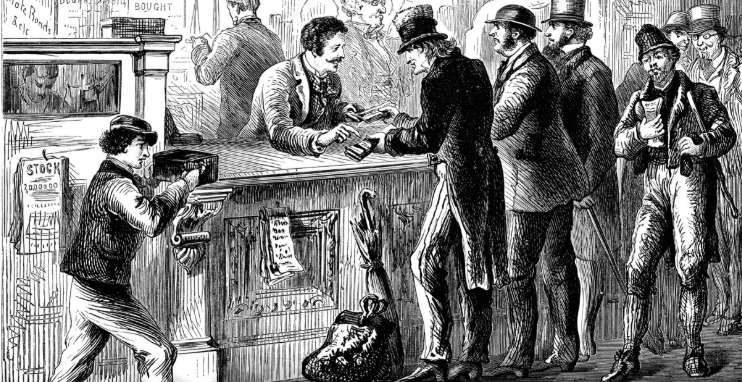
Anecdote (Jan 2024): “The game of speculation is the most uniformly fascinating game in the world. But it is not a game for the stupid, the mentally lazy, the person of inferior emotional balance, or the get-rich-quick adventurer - they will die poor,” said Jesse Livermore, the speculator made famous by Edwin Lefevre’s Reminiscences of a Stock Operator, 1923. It was the first and best book I’ve read on speculation. Livermore was my Lao Tzu. “Wall Street never changes, the pockets change, the suckers change, the stocks change, but Wall Street never changes, because human nature never changes,” said Livermore, and I became utterly obsessed with studying previous bull and bear markets. “Trends come like a series of ocean waves, bringing the high tide when things are good and, as conditions recede, the low tide appears. These trends come unexpectedly, unpredictably, and they must be weathered with temperance, poise, and patience - good or bad.” His musings formed the basis for my interest in systematic trend-following. “It isn’t a hunch but the subconscious mind, which is the creative mind, at work. That is the mind which makes artists do things without their knowing how they came to do them. Perhaps with me it was the cumulative effect of a lot of little things individually insignificant but collectively powerful,” explained Livermore, describing the magic we find on long quiet walks. “Instead of hoping he must fear and instead of fearing he must hope. He must fear that his loss may develop into a much bigger loss, and hope that his profit may become a big profit,” said Jesse. It is a paradox that exposes a fatal flaw in the human psyche when it comes to speculating. “A loss never bothers me after I take it. I forget it overnight. But being wrong - not taking the loss - that is what does damage to the pocketbook and to the soul.” Years later I learned Livermore died of a self-inflicted gunshot wound, broke, alone, his soul damaged beyond repair. It was his final lesson. Teaching us to show the utmost respect to the most uniformly fascinating game in the world.
Good luck out there,
Eric Peters
Chief Investment Officer
One River Asset Management
Week-in-Review: Mon: US emp mfg 20.6 (10.0e). Canada CPI 3.0% (2.9%e). China IP 4.5% (5.0%e), ret sales 0.6% (1.5%e). Japan GDP ann SA QoQ 1.1% (2.0%e). US-Iran peace prospects dim as Trump rejects Truce extension. US-Canada trade talks are bogged down by auto sector tariffs. S&P -0.5%. Tue: US IP MoM 0.2% (0.3%e), housing starts 1239k (1345k e). Trump nominated White House policy aide Heidi Overton to lead FDA. Trump delays Canada for three days, saying deal is close. Investors turn bearish on French government bonds as politicians prepare for a fight over the 2027 budget ahead of next year’s presidential election. S&P -0.7%. Wed: US Treasury announced a doubling of buyback sizes for 10- to 30-year Treasury debt securities to at least $4bln per operation (essentially a new operation twist). UK CPI 2.9% as exp, Core 2.6% (2.5%e). Eurozone CPI 2.9% as exp, Core 2.5% as exp. South Africa CPI 4.3% (4.5%e). Australia unemp rate 4.5% (4.4%e). Trump says US starting “economic warfare” operation against Iran. US set to cut tariffs on Canada metals, autos in trade deal. Moderna sees 160% surge after the company said its personalized cancer vaccine developed with Merck helped reduce the recurrence of melanoma in a late-stage trial. S&P +0.2%. Thu: US init jobless claims 206k (210k e). Japan Natl CPI 1.9%e as exp. Anthropic expects to match or top SpaceX’s record IPO size. Treasury Secretary Bessent said the Trump administration will unveil a new fiscal initiative, with bigger buyback potential. Bessent to hold press conference Monday on Iran plans. S&P -0.9%. Fri: Mexico ret sales 2.7% (3.1%e). Bitcoin nears $80,000 amid biggest weekly rally in three years. Anthropic taps Google chip veteran as part of push into an in-house silicon business. President Lula calls Trump to resume talks over US tariffs on Brazil. Mexico optimistic it can achieve lower US tariff on cars, steel. Canada suspends US trade talks, vows to match Trump’s tariffs dollar for dollar. S&P +0.4%.
Weekly Close: S&P 500 -1.4% and VIX +0.88 at +15.13. Nikkei -3.9%, Shanghai -0.6%, Euro Stoxx -0.6%, Bovespa +2.5%, MSCI World -1.2%, MSCI Emerging +1.2%, Bitcoin +22.7%, and Ethereum +28.7%. USD rose +0.3% vs Turkey, and +0.3% vs India. USD fell -1.6% vs Brazil, -1.4% vs Russia, -1.2% vs Australia, -1.1% vs South Africa, -0.9% vs Euro, -0.8% vs Canada, -0.8% vs Sterling, -0.7% vs Indonesia, -0.6% vs Mexico, -0.6% vs Sweden, -0.3% vs China, -0.2% vs Yen, and flat vs Chile. Gold +5.5%, Silver +6.8%, Oil (WTI) +6.9%, Oil (Brent) +6.6%, NatGas (US) +1.5%, NatGas (EU) +7.2%, Power (EU) +0.2%, Copper -0.4%, Iron Ore +2.9%, Corn +5.2%. 10yr Inflation Breakevens (EU +8bps at 2.13%, US +5bps at 2.33%, JP -1bp at 2.04%, and UK flat at 3.28%). 2yr Notes +7bps at 4.24% and 10yr Notes +4bps at 4.74%.
YTD Equity Index Returns: Korea +70.6% priced in US dollars (+64% priced in won), Taiwan +54% priced in US dollars (+56.1% priced in Taiwan dollars), Colombia +47.1% priced in dollars (+18.9% priced in pesos), Hungary +41.1% in dollars (+33.9% in forint), Norway +37.2% (+26.5%), Japan +29% (+31.1%), Poland +25.9% (+29.3%), Singapore +24.1% (+22.4%), Austria +23.7% (+24.5%), Greece +23.6% (+24.2%), Thailand +23.3% (+28.1%), Russell 2000 +21.6%, Israel +18.4% (+10.8%), Portugal +17.8% (+18.3%), Italy +16.4% (+17.2%), Netherlands +15.7% (+16.3%), Turkey +15.2% (+28.9%), Canada +15.1% (+15.5%), Spain +14.8% (+15.3%), Belgium +13.8% (+14.3%), Brazil +13.1% (+6.1%), NASDAQ +12.6%, MSCI World +12.2% priced in dollars, S&P 500 +12.1%, Australia +11.7% (+4%), Euro Stoxx 50 +11.1% (+11.6%), Sweden +10.9% (+14.2%), UK +10.5% (+8.9%), Finland +9.1% (+9.8%), Mexico +9% (+2.2%), Ireland +7.8% (+8.3%), Switzerland +7.6% (+9%), New Zealand +7.2% (+3.1%), Chile +6.4% (+8.2%), Germany +6% (+6.7%), South Africa +5.8% (+2.2%), Saudi Arabia +4.3% (+4.4%), Malaysia +3.9% (+3.4%), France +3.6% (+4.1%), Czech Republic +3.5% (+3.7%), China +2.3% (-1.6%), Denmark +0.9% (+1.6%), HK +0.7% (+1.5%), UAE +0.1% (+0.1%), Vietnam -0.3% (-0.9%), Philippines -1.8% (+3.1%), Argentina -7.4% (-4.5%), India -12.8% (-7.2%), Indonesia -28.6% (-24.5%).
Disclaimer: All characters and events contained herein are entirely fictional. Even those things that appear based on real people and actual events are products of the author’s imagination. Any similarity is merely coincidental. The numbers are unreliable. The statistics too. Consequently, this message does not contain any investment recommendation, advice, or solicitation of any sort for any product, fund or service. The views expressed are strictly those of the author, even if often times they are not actually views held by the author, or directly contradict those views genuinely held by the author. And the views may certainly differ from those of any firm or person that the author may advise, converse with, or otherwise be associated with. Lastly, any inappropriate language, innuendo or dark humor contained herein is not specifically intended to offend the reader. And besides, nothing could possibly be more offensive than the real-life actions of the inept policy makers, corrupt elected leaders and short, paranoid dictators who infest our little planet. Yet we suffer their indignities every day. Oh yeah, past performance is not indicative of future returns.